.png)
Heatwave Workshop in Bhubaneswar Highlights Need for Better Climate and Health Preparedness
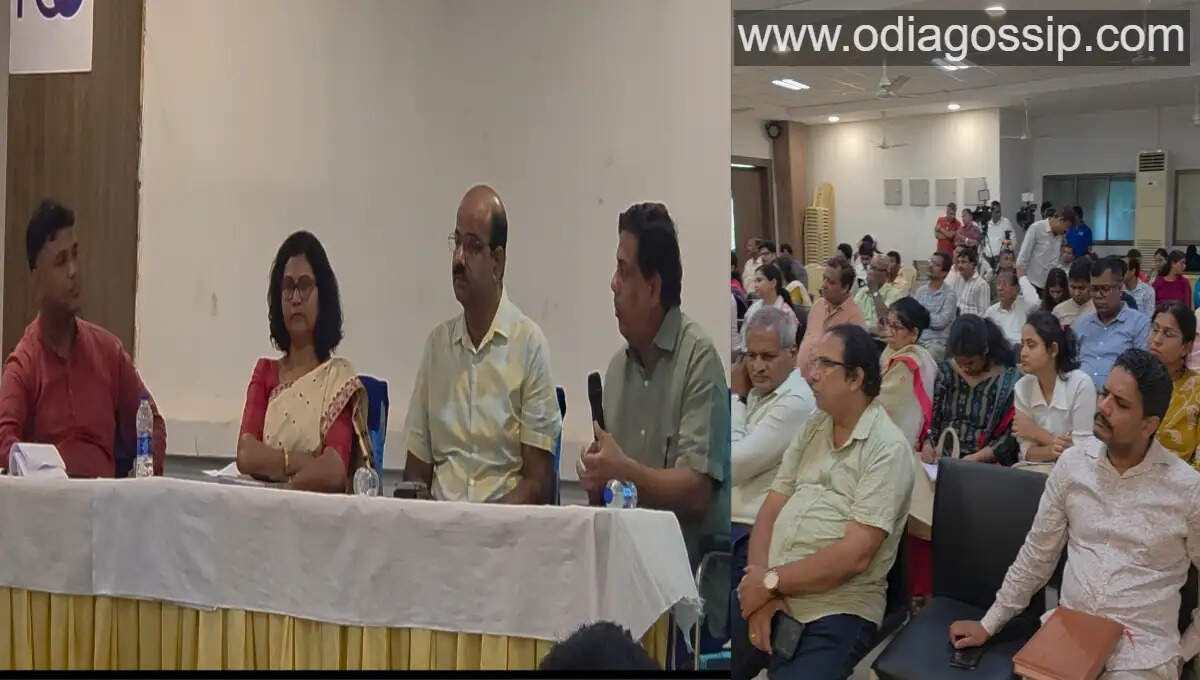
Bhubaneswar (Odia Gossip Bureau): An interactive workshop on “Heatwaves, Health Risks & Weather Reporting” was held at the Press Club of Odisha in Bhubaneswar on Tuesday. The event was organised by the Press Club of Odisha, Socratus Foundation for Collective Wisdom, Odisha Environment Congress, and ASAR Social Impact Advisors.
The workshop brought together journalists, climate experts, scientists, doctors, and civil society members to discuss the rising threat of heatwaves and the importance of responsible reporting on climate-related risks.
Speaking at the event, experts said heatwaves should not be seen only as weather events but also as serious health, livelihood, and governance challenges. They stressed the need for stronger community participation and better public awareness to reduce the impact of extreme heat.
Prof. Debadatta Swain of IIT Bhubaneswar explained how prolonged exposure to extreme heat affects the human body. He said rising temperatures can increase heart stress and the risk of heatstroke. He also highlighted the difference between actual temperature and “felt temperature,” which depends on humidity and other weather conditions.
Dr. Ashutosh Acharya from Aurassure presented data showing that rapid urbanisation and concrete structures have increased temperatures in different parts of Bhubaneswar. He discussed the Urban Heat Island effect and urged journalists to use local stories and data visualisation to explain heat-related dangers to the public.
The panel discussion included Dr. Manorama Mohanty, Director of IMD Bhubaneswar, Dr. Arabinda Mishra of Development and Environment Futures Trust, and senior journalist Bhabani Tripathy. The experts said Heat Action Plans should become broader climate-health management systems rather than only temperature response measures. The session was moderated by senior reporter Anuj Das from Kanak News.
Participants stressed that local bodies, universities, youth groups, and civil society organisations should play a bigger role in implementing heat preparedness plans. They also highlighted the importance of identifying vulnerable groups such as outdoor workers, children, elderly people, homeless persons, and people with disabilities. This session
Dr. Arabinda Mishra said children are especially vulnerable to heat stress, which can cause skin problems, sleep disorders, and mental stress. He also warned that warmer nights are reducing recovery time from heat exposure.
The speakers noted that construction workers, sanitation staff, delivery workers, farmers, and street vendors face the highest risk during extreme heat due to long hours outdoors.
Dr. Manorama Mohanty advised media organisations to avoid fear-based reporting that could create panic among the public. She called for responsible communication and stronger coordination between scientific institutions and journalists.
The workshop also discussed measures such as shaded public spaces, drinking water kiosks, revised school timings during heatwaves, occupational heat safety rules, and the creation of climate volunteers or “Heat Mitras.”
A short film titled It’s Only 47°C, produced by Naseeruddin Shah, was screened during the event. The film focused on how rising temperatures affect traffic personnel, gig workers, farmers, and other vulnerable communities.
The programme concluded with a call for long-term climate resilience planning and stronger public engagement to tackle the growing heat crisis in Odisha.